 Practical Guide to 3D Bin Packing Algorithms: From Principle Research to Code Implementation
Practical Guide to 3D Bin Packing Algorithms: From Principle Research to Code Implementation
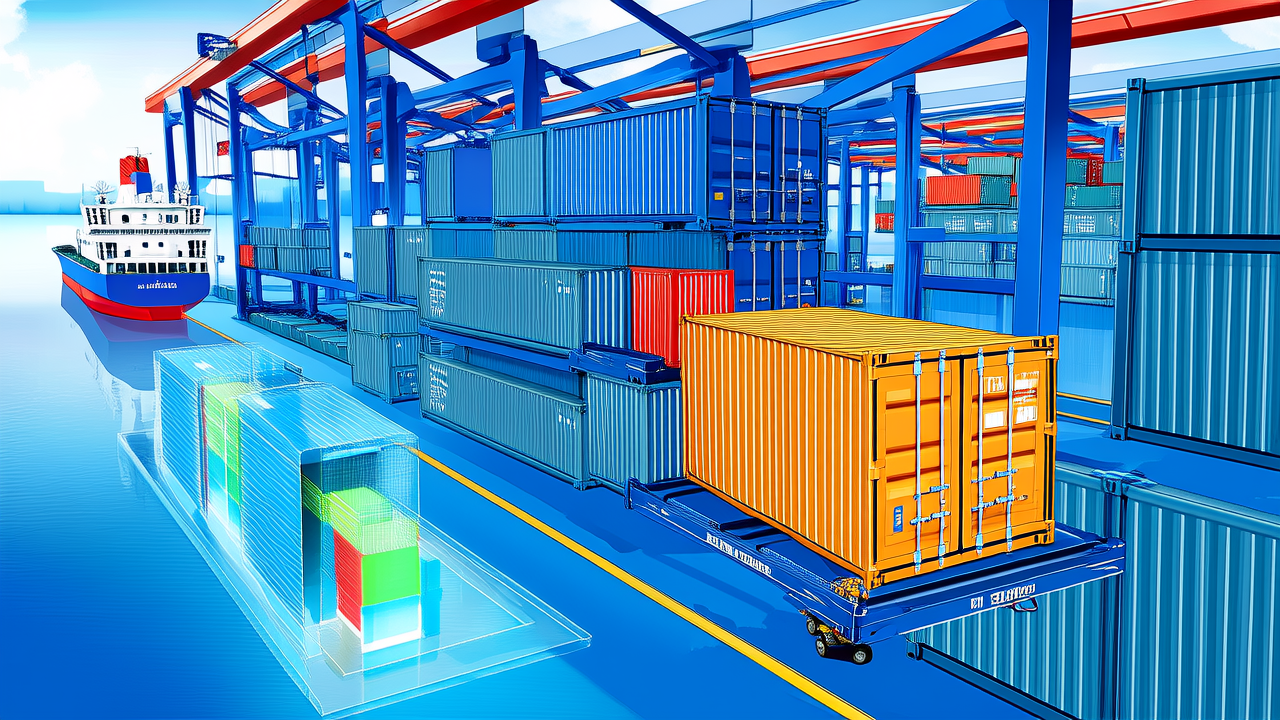
1. Background and Research Objectives
In business scenarios such as TMS transportation systems, intelligent warehousing, and cross-border e-commerce logistics, intelligent packing algorithms can significantly improve space utilization and reduce transportation costs. The 3D Bin Packing Problem (3D-BPP) is a classic challenge in combinatorial optimization—given a set of items with varying sizes and weights, and containers of limited capacity, the goal is to pack all items into as few containers as possible. This problem has been proven to be NP-hard, and its decision version is NP-complete. This means that finding exact solutions in polynomial time is practically impossible, making the study of approximation algorithms, heuristics, and intelligent optimization methods of great engineering significance.
Our research objectives include:
- 🔍 Explore algorithm classification and applicable scenarios;
- 📊 Analyze features of industry-leading products such as Cube-IQ;
- 🧪 Deconstruct the implementation and limitations of open-source heuristic algorithms;
- 💻 Develop and validate an extended packing demo.
🧩 2. Comprehensive Overview of Packing Algorithm Types
The solution methods for 3D bin packing have evolved from traditional heuristics to metaheuristics, mathematical programming, and deep reinforcement learning. The following table classifies mainstream methods by algorithm type:
| Algorithm Type | Example Algorithms | Characteristics | Application Areas |
|---|---|---|---|
| Heuristic Algorithms | First-Fit, Best-Fit, FFD, DBLF | Fast, interpretable, suitable for regular goods | Warehouse real-time scheduling |
| Metaheuristic Algorithms | Genetic Algorithm, Simulated Annealing | Handle complex constraints, slower | Routing/production optimization |
| Mathematical Programming | Mixed Integer Programming, Branch and Bound | High precision, suitable for small-scale | Fine-grained scheduling |
| Machine Learning Methods | Reinforcement Learning, Graph Neural Networks | High potential, data-hungry | Research/future directions |
Heuristic algorithms are the most widely used in industry. In one-dimensional scenarios, classic strategies like First Fit, Best Fit, and First Fit Decreasing (FFD) can be extended to three dimensions. Specifically, Deepest Bottom Left with Fill (DBLF) and Bottom-Left-Back-Fill (BLBF) are placement heuristics designed for 3D problems, which find the 'deepest, bottom-left, back' position along coordinate axes to construct compact loading plans.
Metaheuristic algorithms can search for near-optimal solutions in more complex constraint spaces. Recent studies show that hybrid methods combining genetic algorithms and simulated annealing (GenSA-3DBPP) perform well in multi-level 3D bin packing—the genetic algorithm layer handles global exploration, while the simulated annealing layer refines the best solution.
For exact algorithms, Martello, Pisinger, and Vigo proposed a branch-and-bound algorithm based on a two-level decomposition principle, capable of solving small-scale 3D bin packing problems exactly. However, due to NP-hardness, exact algorithms are often impractical for large instances.
Deep Reinforcement Learning (DRL) is one of the most promising frontiers. A systematic review published in 2025 analyzed 231 papers from 2019–2024, finding that DRL excels in complex multi-dimensional packing scenarios. Representative works like BoxStacker (for 3D-BPP) and PackerBot (DRL integrated with heuristics) demonstrate the great potential of AI-driven approaches. Frameworks like One4Many-StablePacker further improve efficiency and stability in online 3D packing.
🔍 3. Competitive Product Analysis: Cube-IQ Features
Cube-IQ, developed by MagicLogic, is a flagship load optimization software adopted by over 3,000 logistics professionals worldwide. As a leading commercial 3D packing tool, its core capabilities include:
- ✅ Multi-shape containers and items: supports not only standard cuboids but also cylinders, 3D L-shapes (e.g., sofas), and other irregular objects;
- ✅ Mixed palletization: efficiently mixes different types of items on the same pallet, considering dimensions, weight, stability, orientation, and more;
- ✅ Flexible stacking rule configuration: define independent loading and stacking rules for each item orientation to fit diverse business constraints;
- ✅ Multi-modal transport support: optimizes for road, rail, air, and sea freight;
- ✅ 3D visualization: intuitively displays space utilization via 3D graphics to reduce errors and improve planning accuracy;
- ✅ Dynamic load adjustment: automatically recalculates space utilization when loading configurations change;
- ✅ Automatic axle weight calculation: ensures compliance with legal and safety requirements;
- ✅ Multi-language and localization: supports multiple languages and can localize terminology automatically (e.g., replacing 'container' with 'pallet' or 'skid');
- ✅ Integration with WMS/TMS systems: seamlessly connects to warehouse and transportation management systems.
Real-world case studies show that True Manufacturing saved $213,000 in packaging costs in the first year using MagicLogic's solution; Siemens Healthineers achieved a 95% fill rate, reduced packaging waste by 27%, and significantly lowered transport costs.
🧪 4. Open-Source Heuristic Algorithm Interpretation
We selected the widely-used 3dbinpacking Python project on GitHub as our base implementation. Based on the paper by Erick Dube, this project provides core algorithms for 3D bin packing, with key mechanisms including:
- Sorting strategies for items and bins (default small-to-large, configurable via the `bigger_first` parameter);
- Extreme-point-based heuristic placement;
- Support for multiple packing heuristics (Best-Fit, First-Fit, etc.).
We extended the project with the following enhancements:
- ✅ Stability check: ensures each item has sufficient support area underneath to avoid overhang and cargo tipping during transport;
- ✅ Cylinder support: extends data structures to handle cylindrical items, with customizable orientation (rotation allowed);
- ✅ Multi-bin packing and center-of-gravity detection: supports simultaneous optimization across multiple containers, and automatically computes overall center of gravity after loading to ensure transport safety;
- ✅ JSON structured output: exports packing results (items per bin, coordinates, utilization, etc.) in JSON for easy integration with upstream systems.
Core code structure:
class Box:
    def __init__(self, length, width, height, weight, shape='rect'):
        self.l, self.w, self.h = length, width, height
        self.weight = weight
        self.shape = shape  # 'rect' or 'cylinder'

class Container:
    def __init__(self, length, width, height, max_weight):
        self.l, self.w, self.h = length, width, height
        self.max_weight = max_weight
        self.items = []

    def can_place(self, box, pos):
        x, y, z = pos
        return (x + box.l <= self.l and
                y + box.w <= self.w and
                z + box.h <= self.h)
The `Box` class supports both cuboid and cylinder shapes, while the `Container` class performs basic collision and boundary checks via the `can_place` method. In the actual extreme-point heuristic implementation, the placement logic is more sophisticated—the system maintains a list of available placement points and selects the optimal position (e.g., the one with the smallest remaining space under Best-Fit strategy) for each item.
🧾 5. Packing Performance Comparison: Demo vs Cube-IQ
We tested both Cube-IQ and our extended algorithm using the same set of items:
| Solution | Supported Shapes | Multi-bin Support | Space Utilization | Reporting |
|---|---|---|---|---|
| Cube-IQ | ✅ | ✅ | High (up to 95%+) | Multi-dimensional charts |
| Extended Algorithm | ✅ (incl. cylinders) | ✅ | Medium | JSON output |
From the comparison, Cube-IQ shows significant advantages in space utilization, especially under complex constraints (axle weight, unloading order, multi-modal). Its commercial-grade optimization engine can consider hundreds of constraints simultaneously to achieve near-optimal loading plans. The extended open-source algorithm, while not matching commercial products in extreme utilization, offers excellent customizability and transparency—developers can freely modify placement strategies, add constraints, and integrate into existing architectures. For small-to-medium scale or budget-constrained projects, open-source provides a cost-effective starting point.
✅ 6. Conclusion
Intelligent packing is not only an algorithmic challenge but also a frontier where engineering systems converge. From heuristics to mathematical programming and then to AI algorithms, we stand at a new starting point for cost reduction and efficiency improvement.
Reviewing the development trajectory: classical heuristics (FFD, DBLF) dominate industrial real-time scheduling due to speed and interpretability; metaheuristics (GA+SA) find better solutions under complex constraints; exact algorithms (branch and bound) guarantee optimality for small problems; and deep reinforcement learning represents the future—DRL models have shown potential to surpass traditional heuristics in complex multi-dimensional packing scenarios.
However, DRL methods still face challenges in scalability, computational efficiency, and generalization. One key future direction is the exploration of hybrid models—combining the domain knowledge of heuristics with the adaptive capabilities of reinforcement learning, as well as emerging approaches like vision-assisted DRL.
We will continue to explore explainable and deployable intelligent packing engines, driving the evolution from static algorithmic methods to intelligent, learning-driven optimization strategies.
🎯 Feel free to leave a comment: What challenges have you encountered in packing algorithms?
This article is compiled by the Operations Research and Algorithm Engineering team based on research reports and recent literature, with extensive practical experience in combinatorial optimization.
Sources: Martello, S., Pisinger, D., & Vigo, D. (2000). The Three-Dimensional Bin Packing Problem. Operations Research; Dahmani, N., Nazir, A., Taleb, I., & Bukhari, S.M.S. (2025). Reinforcement learning based intelligent optimisation for bin packing problems: A review. Array, 28, 100616; A hybrid Genetic Algorithm and Simulated Annealing approach for multi-level 3D bin packing problem. Procedia Computer Science, 2024; Cube-IQ - MagicLogic Load Planning Software; Extreme Point-Based Heuristics for Three-Dimensional Bin Packing. INFORMS Journal on Computing, 2008.